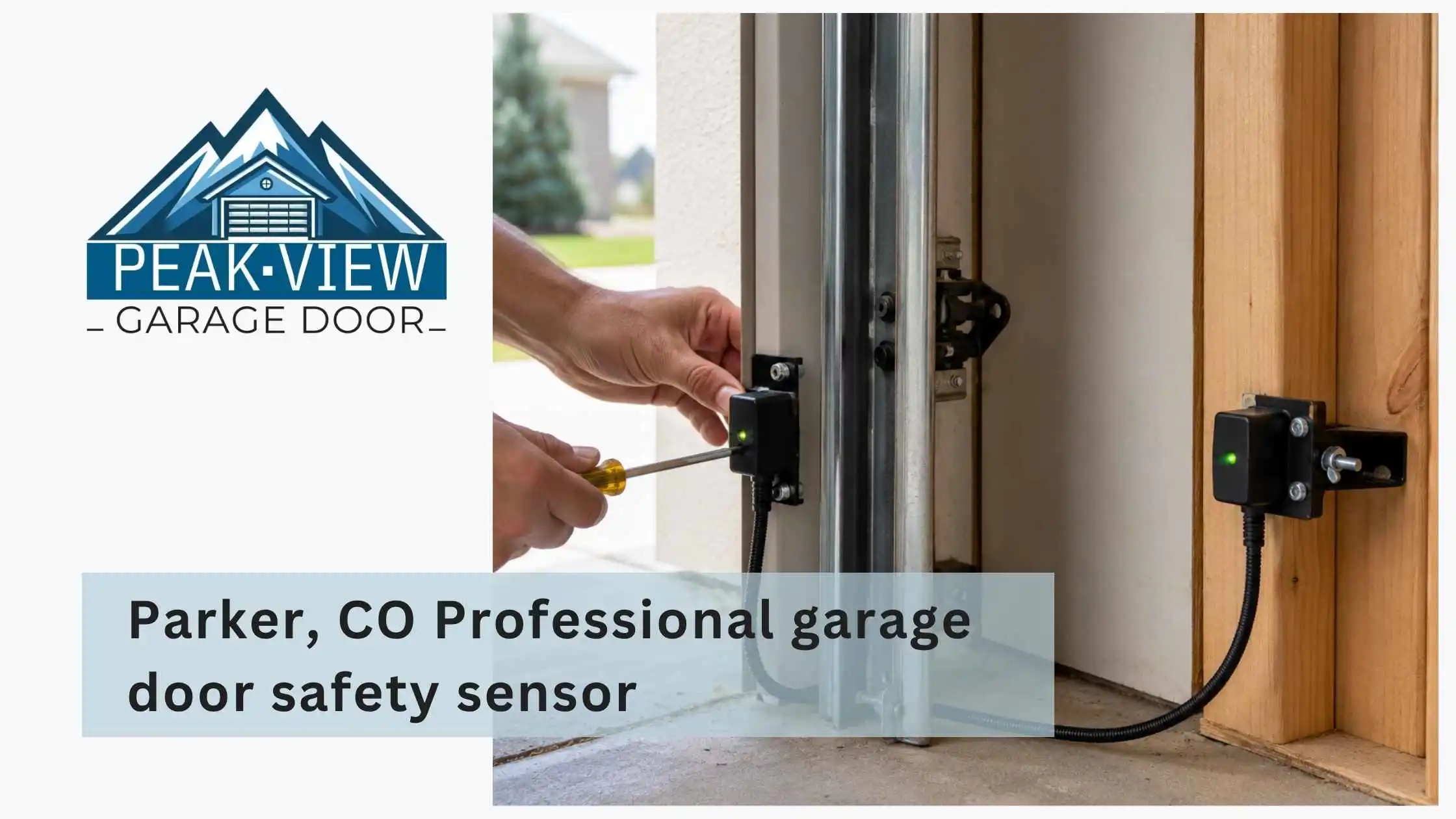
Parker, CO homeowners rely on automatic garage doors every day, but seasonal temperature changes, dust, debris, and regular use can affect the small safety components that keep these systems operating correctly. One of the most important is the garage door safety sensor. When sensors become dirty, misaligned, damaged, or electrically faulty, a garage door may refuse to close, reverse unexpectedly, or behave inconsistently. Professional garage door safety sensor service in Parker helps identify these problems and restores the safety system before a minor issue becomes a larger garage door malfunction.
Peak View Garage Door provides professional garage door repair and maintenance, including safety sensor calibration, inspection of the opener system, and general servicing designed to keep garage doors operating safely and reliably. Its maintenance recommendations include safety sensor calibration alongside balance testing, track and roller inspection, lubrication, and spring and cable adjustments.
What Is a Garage Door Safety Sensor?
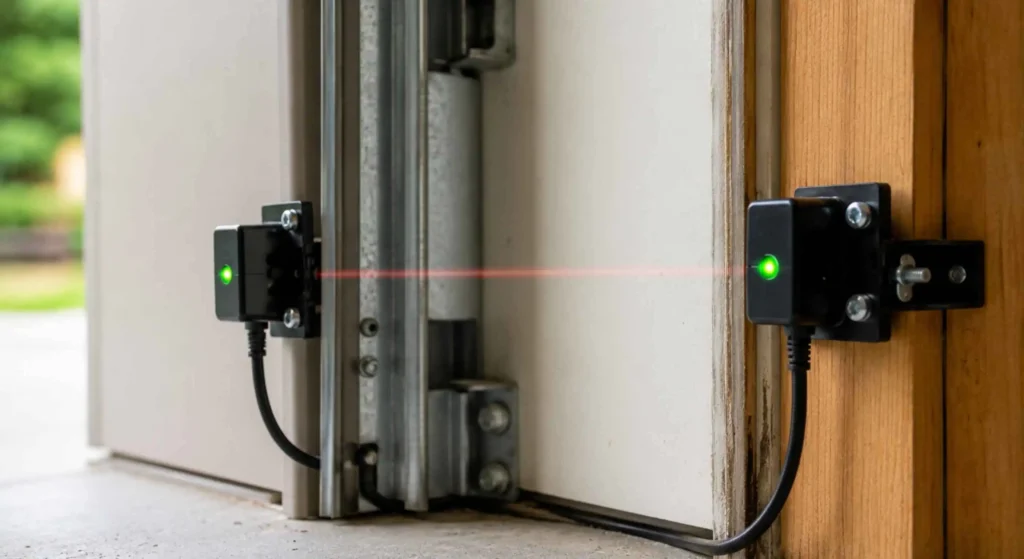
A garage door safety sensor is a small but essential component of an automatic garage door system. The sensors are typically installed near the bottom of the garage door tracks, facing each other across the opening.
Their job is to detect whether something is blocking the door’s path.
When the sensors communicate properly, the opener can operate normally. If the beam between them is interrupted or the sensors cannot communicate correctly, the opener may prevent the door from closing or cause it to reverse.
This safety feature is particularly important for homes with children, pets, vehicles, and frequently used garage entrances.
Why Sensor Problems Can Be Confusing
A faulty safety sensor does not always look broken.
The garage door opener itself may have power. The remote may work. The motor may run. Yet the door may refuse to close.
This can lead homeowners to assume that the opener has failed when the actual problem is located at the safety sensors or their alignment.
Professional diagnosis helps distinguish a sensor problem from issues involving the opener, wiring, tracks, springs, or other components.
A Parker Homeowner’s Sensor Problem
Consider a Parker homeowner who noticed that the garage door opened normally but would not stay closed. Every time the homeowner attempted to close it, the door would begin moving downward and then reverse.
At first, the problem appeared to be an opener failure.
A professional technician inspected the complete system and found that the safety sensors were no longer properly aligned. Because the sensors could not maintain a reliable connection across the garage opening, the opener interpreted the situation as a possible obstruction.
The technician corrected the sensor alignment, inspected the sensor area, and tested the door repeatedly to confirm that the safety system responded correctly.
The problem was resolved without replacing the entire opener.
This type of situation demonstrates why professional diagnosis matters. Replacing an expensive opener when the underlying problem is a sensor alignment issue does not solve the actual cause.
Common Garage Door Safety Sensor Problems
Several issues can interfere with proper sensor operation.
Misaligned Sensors
The two sensors must face each other correctly. If one is knocked out of position, the invisible safety beam may no longer connect properly.
Minor movement can happen through normal garage activity, accidental contact, vibration, or maintenance work around the door.
Dirt and Debris
Dust and debris can accumulate around the sensor lenses or mounting area. Parker properties can experience seasonal dust and outdoor debris that eventually make their way into the garage.
Even when the sensors are physically intact, contamination can interfere with reliable operation.
Damaged Sensor Hardware
A sensor or its mounting bracket can become damaged through accidental impact. A loose bracket may also allow the sensor to move out of alignment.
Wiring Problems
Sensors rely on electrical connections to communicate with the opener. Damaged, loose, or deteriorated wiring can create intermittent problems.
Opener Communication Problems
Sometimes the sensors themselves are functioning correctly while another part of the opener system is causing the problem. Professional testing helps determine where the fault actually originates.
Why Parker’s Climate Matters
Parker’s location along Colorado’s Front Range means garage doors experience noticeable seasonal changes. Cold winter conditions, warmer summer temperatures, wind, dust, and changing weather can all affect components exposed inside and around the garage.
While safety sensors are designed for normal garage conditions, repeated exposure to dust, temperature changes, vibration, and everyday use can contribute to maintenance needs.
Temperature Changes
Metal brackets and other components can experience small changes as temperatures fluctuate. If a sensor is already marginally aligned, these changes can make an existing problem more noticeable.
Dust and Outdoor Debris
Garage doors provide a connection between the home’s interior and exterior environment. Dirt and debris can accumulate around tracks, rollers, sensor brackets, and other components.
Frequent Door Cycles
A busy household may open and close its garage door several times every day. Over months and years, repeated operation can contribute to loosening, wear, and alignment issues.
Professional maintenance helps identify these issues before they cause a complete failure.
Signs Your Garage Door Safety Sensor Needs Service
Parker homeowners should consider professional inspection if the garage door begins behaving differently.
Common warning signs include:
- The door will not close completely
- The door reverses unexpectedly
- The opener works intermittently
- The door closes only when certain conditions are met
- Sensor indicator lights behave unusually
- The door starts closing and immediately returns upward
- Sensor brackets appear loose or damaged
- The garage door becomes unreliable after seasonal changes
- The opener appears to work but the door will not close
These symptoms should not be ignored because the safety sensors are part of the system responsible for preventing the door from closing when an obstruction is detected.
Why Professional Sensor Service Is Better Than DIY
A safety sensor may appear simple, but diagnosing the complete garage door system requires more than looking at the sensor lights.
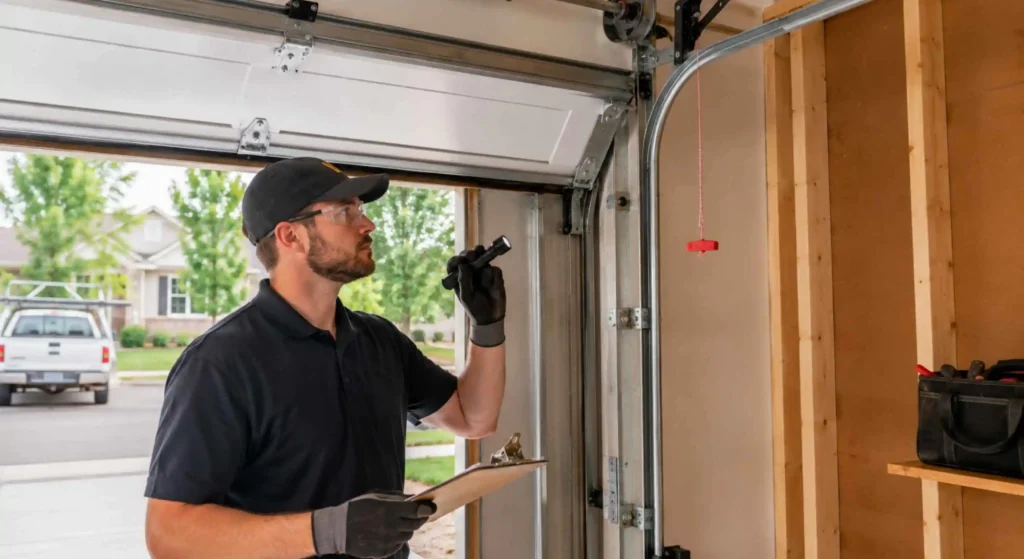
Peak View Garage Door explains that common garage door problems can originate from sensor misalignment, remote controls, springs, cables, or other components. Its technicians inspect the photo-eye sensors, test opener components, and perform recalibration, replacement, or system realignment depending on the underlying issue.
Professionals Diagnose the Root Cause
A sensor may be showing symptoms because of misalignment, wiring, the opener, or physical damage. Professional inspection helps identify the actual source.
Correct Calibration Matters
Simply moving a sensor until the door closes does not guarantee that the safety system is functioning correctly. Proper calibration and testing are important after service.
Garage Doors Contain Other High-Tension Components
The sensors are only one part of a much larger mechanical system. Springs and cables can carry substantial tension, while the door itself is heavy.
A professional technician can work around these components without treating a sensor problem as an isolated DIY project.
Proper Testing Confirms Operation
After service, the garage door should be operated repeatedly to verify that it opens and closes correctly and that the safety system responds as expected.
How Safety Sensor Service Fits Into Garage Door Maintenance
Sensor calibration should not be viewed as a one-time repair.
Peak View Garage Door recommends preventive maintenance that includes lubrication of moving parts, balance testing, track and roller inspection, spring and cable adjustment, and safety sensor calibration.
A professional maintenance visit can therefore identify several problems at once.
Balance Testing
An unbalanced garage door can place unnecessary strain on the opener and other components.
Track and Roller Inspection
Worn or damaged rollers and tracks can affect how smoothly the door moves.
Spring and Cable Inspection
Springs and cables are critical to the door’s lifting system and should be evaluated for wear.
Safety Sensor Calibration
Proper sensor positioning helps ensure that the automatic door’s safety system is functioning as intended.
When Should You Replace a Garage Door Safety Sensor?
Not every sensor problem requires replacement.
If the sensor is simply misaligned, recalibration may resolve the issue. If dirt or debris is interfering with operation, appropriate servicing may be enough. However, damaged sensors, faulty wiring, or components that can no longer operate reliably may require replacement.
A professional technician can determine whether repair, adjustment, or replacement makes the most sense.
The important point is to avoid replacing components based solely on symptoms.
Protecting Your Garage Door’s Safety System
Homeowners can help protect their garage door system by avoiding impacts around sensor brackets and scheduling professional maintenance when the door begins behaving differently.
However, safety-related repairs should not become an experiment with household tools.
A garage door is a heavy mechanical system. Its opener, springs, cables, tracks, rollers, and safety sensors all work together. When one component stops functioning correctly, professional inspection can determine whether the problem is isolated or part of a larger issue.
Peak View Garage Door’s approach focuses on identifying root causes rather than simply treating visible symptoms, with maintenance services designed to support safe and efficient garage door operation.
Frequently Asked Questions
Why won’t my Parker garage door close?
A garage door that opens normally but refuses to close may have a safety sensor problem, although other opener or mechanical issues can produce similar symptoms. Professional diagnosis can identify the actual cause.
How often should garage door safety sensors be checked?
They should be inspected as part of routine garage door maintenance and whenever the door begins behaving inconsistently. Peak View Garage Door includes safety sensor calibration among its preventive maintenance services.
Can a dirty sensor cause the garage door to reverse?
Yes. Contamination or an interrupted sensor signal can cause an automatic opener to interpret the situation as an obstruction and prevent normal closing.
Should I replace the opener if the sensors stop working?
Not necessarily. Sensor misalignment, wiring, or calibration issues may be repairable without replacing the opener. A professional inspection should come first.
Is garage door sensor repair safe to perform myself?
Because the sensors are part of a larger system containing heavy moving components and high-tension hardware, professional service is recommended for diagnosis, calibration, and repair.
Schedule Professional Garage Door Sensor Service in Parker
A malfunctioning garage door safety sensor can turn a convenient automatic door into an unreliable one. More importantly, the sensors are an important part of the garage door’s safety system and should be treated accordingly.
Peak View Garage Door provides professional garage door maintenance and repair, including safety sensor calibration, balance testing, track and roller inspection, spring and cable adjustments, and other services designed to keep garage doors operating safely. The company lists Parker among the Colorado communities it serves.
If your Parker garage door refuses to close, reverses unexpectedly, or has an unreliable safety sensor, contact Peak View Garage Door at (303) 731-9041 to schedule professional service and request a quote.